Blog's Translator

Visualizzazione post con etichetta Scented waters. Mostra tutti i post

lunedì 25 giugno 2012

Solstice Traditions in Italy


The Eve of St.John's Day: 
A process of purification of soul, mind and body through the simplicity of our ancient cultures. It is a social event! 


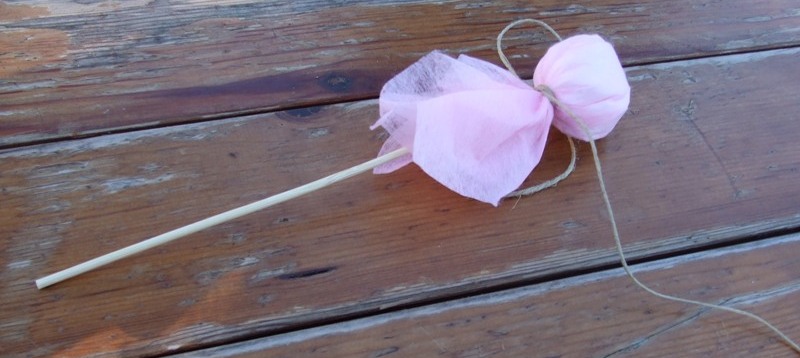
This handmade puppet is called "streghetta"
(tr.little witch). You add a scroll where you write down
your fears and fire the witch at the end of the day 
in a collective bonfire. Your fears will disappear! 


On the eve of St.John's Feast Day, June 23rd 2012, I took part in a workshop reviving ancient Italian traditions. I learned many interesting new things that I would like to share with you today. 

1. the making of a which (I call it "witch-ina"=streghetta in Italian, little witch) which is related to the purification of our soul by exorcizing our fears; 

2. the making of little bouquets of magic herbs (tr."mazzolini") out of nine selected herbs that are considered as miraculous and related to the purification of our mind;    

3. the making of "perfumed water" (tr."acqua odorosa") which is related to the purification of our body. This water makes an excellent tonic, refreshing water!
St.John's wort, "Hypericum Perforatum"
is the original name in Latin. 


This is the first step to make a witchina


The "witchina" was the first thing I made. I selected the color of the dress from several beautiful rainbow colors. I used two sticks, two strings, a piece of cotton and a small pink piece of fabric for the head. At the end of the day, I participated in the dances hand in hand around a bonfire. People were launching their witches into the fire. The wind was adding magic to the experience. Familiar pieces of music from Renaissance times were playing in the background and were very meaningful to me. I wanted to think that I got over all my fears. Therefore I did not fire my witchina. I had given it away as a gift instead of wishing to meet the person I gave it to that day. I think she is a wonderful person. She said she would keep the puppet as a memory.


Laurel's leaves: "Laurus nobilis" in Latin
After making my witchina I moved to a different table where they were making "magic bouquets" for the rest of the participants in the event. These magic bouquets were composed of five out of nine magic herbs: wild mint, laurel, lavender, St.John's wort and rosemary. All in even numbers except two leaves of laurel. I received the instructions to place this bouquet under my pillow during that night by expressing a wish. The wish would come true and I would sleep like in paradise. I slept like in paradise...I added some magic to the instructions by transferring my bouquet under the pillow of my fiancé to enjoy it upon his return from work early in the morning. I said to him to express his wish. At the end of his sleep, he said he felt relaxed and it was great we could share the same experience.

Lavender's name in Latin is
"Lavandula Officinalis"

Rosemary "Rosmarinus Officinalis": the herb
of the memory.

I came home from the workshop right before midnight with my lidded container of perfumed water out of the one hundred herbs. This was the third thing I chose to do in the workshop. I had participated in picking some of the herbs during a walk we took with herbs experts. They said to me that St.John the Baptist would pass and bless my perfumed water at midnight. So I was happy to be home right on time. 

I took off the lid of my small container of perfumed water and placed the perfumed water outside the window and waited...midnight arrived a few minutes later and I knew that St.John had passed under the windows and blessed my water. I was so happy! In the morning I filtered the water, took some cotton and passed this water on my body for the first time in my life. It was the most refreshing water I had ever tried. I did the same to my fiancé who was hesitating at first and then enjoyed it very much! 


Mint equals "Mentha" in Latin 
And as the line goes "everybody likes dreaming". This experience made me feel part of a magic world of peace, happiness and health. Dreaming is our life's poetry: reviving our ancestors' traditions makes us feel immortal. We can think of our future with a different attitude. We feel we are not alone: past, present and future gather together in a magic circle of rebirth.

If you wish to share traditions about solstice celebrations coming from different cultures, you are welcome to add your comments to this post. Poetry goes beyond the limits of languages, we can all share the same poetry worldwide. Thank you for sharing! 


-----------------------------------------

- Original Posts by Roberta Niccacci -


FRIENDS OF CAMA 
Join the Facebook Page to Receive Blog Updates 

NEW!

Now on Twitter

giovedì 21 giugno 2012

Sacred Fire, Creativity and the Bonfire of Vanity

Dante Alighieri "The Supreme Poet" meets his love, Beatrice Portinari (in the foreground), in front of the Church of
Santa Margherita de' Cerchi, accompanied by her mother, Cilia de' Caponsacchi and by her friend, Monna Tessa. The painting is hanging on the left wall of the church located in downtown Florence.  This church is also known as "Dante's Church"  (photo by: Roberta Niccacci). 


"Dante" (short for "Dante Alighieri") is known as
the father of the Italian language, "The Poet" who gave the
the final touch to our language in its evolution from Roman
Latin to Italian. 


I thought of our most important poet of all times, our "Greatest Bard of All", "The Poet", the Father of the Italian Language, Dante Alighieri (Florence, 1265 AD - Ravenna, 1321 AD) when I was exploring ways to describe the importance of the "Sacred Fire", "Fire", "Divine Fire" within the celebrations of the Summer Solstice in Italy. On June 23rd and June 24th "Fire" is celebrated in Italy as much as "Water" with different traditions according to the areas and mostly with bonfires.  An interesting aspect of sacred fire is its miraculous sparkle that turns our passions on and makes everything we do into magic expressions of life. 

Additionally one of the latest interpretations of the "Divine Comedy", which is the most important epic poem written by Dante Alighieri, is that the book is a description of the creation process, which is perfectly tuned with the theme of the sparkle of sacred fire: creations, innovations, inventions are not easy matters especially if our natural gifts are not fulfilling enough, still going through lots of struggling, turmoils, hard times as in Hell (tr. "Inferno), then resting and posing in a sort of limbo known as Purgatory (tr. "Purgatorio") and finally enjoying success as if in Paradise (tr. "Paradiso"). Indeed the "Divine Comedy" is divided into three parts called "cantiche" (tr.canticas): Hell, Purgatory and Paradise.  

Dante's "Inferno" (tr "Hell") is in the shape of a funnel, starting
with a large hole in the ground, divided into circles of condemned people
according to their sins. 
Lines from the Divine Comedy are written on marble plaques all over the walls of the narrow streets downtown Florence, Dante's rhyming, selection of words and metaphors are uncomparable and impossible to translate in any language including current Italian, we would spoil its reading and our perception of beauty because the "Divine Comedy" is considered as "The Book of Beauty". Florentines are very proud of Dante's artistry. 


In the Summer Solstice traditions the "divine fire" is expressed by bonfires, "falò" is the Italian translation. "Falò" is such a beautiful word! It reminds me of the title of a beautiful book called "La luna e i falò" (tr. "The Moon and the Bonfire") by Italian writer Cesare Pavese (1908-1950), one of the most wonderful classics of Italian literature. 


The Moon and the Bonfire by great Italian
writer and translator Cesare Pavese,
one of my favorite books

Fire makes me think of Hell (tr.Inferno), where temperatures are so high that they are not bearable by our body, on the contrary, the word "Falò" ("Bonfire") is so sweet and delicate that to me it has nothing to do with the fire itself and with hell. Nevertheless, the word "Falò" was also used for deplorable historical events that took place in Florence in the Renaissance among which the most famous one is the "Bonfire of Vanities" (Feb. 7th, 1497, on Mardi Gras day) by Dominican friar Girolamo Savonarola who induced the citizens of Florence to burn hundreds of their belongings that were expressions of vice and bad habits such as cosmetics, gowns, mirrors, books and works of art, among which paintings by Botticelli!

In my new life, nothing such as "sin" exists to me, I am in favor of deleting this word from our dictionaries, and as a consequence the word "guilt", these are the two words to be erased, if we did that the world would be a better place to live in, it would be our Paradise on Earth.


---------------------------------------------------------------------------------------------

A selection of quotes from Dante's Divine Comedy:

  • Non ragioniam di lor, ma guarda e passa. (tr."let's not talk about them, just look and go ahead" is used to recommend not to care about what people say but keep going);
  • Amor, ch'a nullo amato amar perdona (tr. "love sealed by marriage does not permit to have other lovers")
  • Godi, Fiorenza, poi che se' sì grande che per mare e per terra batti l'ali, e per lo 'nferno tuo nome si spande! (tr. "be proud, dear Florence, you are so great that by seas and lands you are successful and you are famous in hell as well!");
  • Fatti non foste a viver come bruti, ma per seguir virtute e canoscenza.(tr."you were not born to be crude but to follow virtues and knowledge");
  • Ed elli avea del cul fatto trombetta (tr. and...his back had turned into a trumpet) !!!

---------------------------------------------------------------------------------------------
Curiosity

The etymology of the Italian word "falò" comes from Greek (PHALOS, PHALAROS) which means "bright", "shining", "sunny", "beaming" related to the idea of a flambeau, partying, gaudy also common to romanesque languages.
The etymology of the American word "bonfire" comes from Middle English banefire (late 15th century) and it means "a fire in which bones were fired", it is a Renaissance neologism first used in the 1550s.


-----------------------------------------

- Original Posts by Roberta Niccacci -


FRIENDS OF CAMA 
Join the Facebook Page to Receive Blog Updates 

NEW!

Now on Twitter

domenica 17 giugno 2012

Solstice Celebrations and Heavenly Places (Part II)

( "Lily...xxoo" photo by: Stanette Marie Rose, founder of "Investor Advocacy")


Fragrant Water: Flowers as the Expression of Life and Eternal Love


by Lisa B.M.
Daisies are among the ingredients of Fragrant Water
(photo by: Lisa B.M. proud mother and wife)


Colleen Simpson, the owner of "L'Antica Vetreria", who is very appreciative of local Italian traditions, also contributing to reviving the village of Piegaro by having her guests participate in the yearly celebrations, commented my original post about St. John's feast Day with these words: "One of the treasures of summer celebrations in Umbria is the exquisite way the Solstice and St. John's Feast Day are woven together to create such an atmosphere of beauty. Gathering flowers in the fields to create fragrant water is a blessing for the entire family! [...]"

Colleen's enthusiasm has encouraged me to write more about the subject of flowers, especially pointing out the interweaving fine thread of sacred and profane, ancient mythology, and traditional beliefs that were in use in our families in Italy. The beautiful blending of sacred and profane applies to the flowers likewise creating here an atmosphere of reverie and eternity.

In mythology flowers have always been considered as the symbol of life, what they call in Latin "Imago Vitae" (tr. image, imitation, depiction of life), and the Fragrant Water, in particular, is a tribute to life as a consequence of the marriage between the Sun (divine fire) and the Moon (water), where masculine and feminine marry and give birth to live in a new seasonal cycle. 

Flowers meanings have mythological origins
In June flowers and herbs are at their highest peak and their active ingredients turn them into powerful healing elements for the body and the soul, if we think of flowers as emblems of eternal and heavenly love, which have been celebrated by Greek mythology and as a consequence in use for weddings, christenings and other important celebrations of life events.

As an example, this is the story of Sunflower, "Girasole" in Italian, which literally means "turning with the sun".

...Sunflower was originally a young lady named Clytia who fell in love with Apollo, the God of Sun. Apollo refused her and she kept  staring at him riding on his cart throughout the sky. Consumed by grief, Clytia transformed herself into a flower: the Sunflower...

Isn't life beautiful and fascinating if we look at this flower with an added perspective that goes beyond our visual ability and our depth of feelings in appreciating beauty and nature? How would you feel if you think that this beautiful and strong flower follows continuously the journey of the sun from east to west, that this flower is a young lady called Clytia whose heart is broken, that she is so tough that she does not desist despite the challenge of the sunbeams, that at the end of the day and upon refusal of Apollo, Clytia lets her petals down to raise them again the following day upon renewed hope? To me this is something very fascinating, a story that enriches my life, adding poetry to my day and making my heart sing because it is all about eternal love.

Gaetano Previati, Il carro del sole (tr.The sun cart), (1907), canvas, 127x185 cm. 
(Credit: Chamber of Commerce, Arts & Crafts, Milan, Italy)


This is not a sponsored post, the mention to companies is free and the tribute to one of the proud mothers and wives I know is in memory of my ancestors, strong mothers and wives for whom working for their family was a valuable and cherished mission as it is now for many women. The three wonderful ladies I mentioned are all my friends, there is love in what they do!


-------------------------------------------------------------------------------------------------------

- Original Posts by Roberta Niccacci -

follow my blog and like my Facebook page: www.facebook.com/friendsofcama


mercoledì 13 giugno 2012

Solstice Celebrations and Heavenly Places

(Photo credit: Kelly R.F., "Butterfly House Shot")


Between sacred and profane the eternal story of our beautiful traditions in Italy 


The night beween June 23rd and June 24th is very well known to our ancestors for one of the most important celebrations of the year: the wedding of the Sun (fire) with the Moon (water) captured by the summer solstice when the sun reaches his maximum positive inclination entering the constellation of the sign of Cancer, symbol of water and dominated by the moon. The month of June is a blast of flowers and fruits, a beautiful expression of this magic marriage.

In Italy the original pagan solemnity of the Summer Solstice has been translated by Christianity into St. John's Feast Day:  fire and water are the elements with which Saint John the Baptist practiced his christenings, this is why in our countryside this midsummer night is called "La notte di San Giovanni" (tr.St. John's Night).

Holiday dress of a little girl
 in the 1800s
Despite the fact that Saint John the Baptist is a very important Saint for the Christianity - he is the only Saint besides the Virgin Mary and Jesus Christ being celebrated on the day of their birth, while the Catholic Church celebrates the rest of the Saints upon the day of their bodily death, which is called as a matter of fact in Latin "Dies Natalis" (tr."the day of birth") because the belief is that we are born to true life after death only - I want to think that there are beautiful social actions that make us eternal, also known as rituals, indeed remembering  the ritual traditions of our ancestors is something that highly cherishes my heart.

As an example this is what my great-grand mother Diamante Niccacci (1883-1970) would do for St. John's Day as a very simple ritual that she would do as a little girl under the supervision of her mother and later on for her family:

  • June 23rd: pick up all sorts of flowers ("fiorellini" tr.little flowers, we use diminutives a lot in Italian, they give us the sense of tenderness, thinking of a little girl in this case) in pristine places; 
  • deep the flowers into a basin filled with fresh, cold water; 
  • place the basin with flowers outside her sleeping room window all night;  
  • filter the water early in the morning of June 24th;
  • wash eyes and face with this water called "Acqua Odorosa" (tr."fragrant water") which was supposed to be purifing her body, heal her eyes and when it was time to get married, bless her to fertility. It was considered as a miraculous water!
Simple dress of a little
girl in the 1800s

Her mother in turn would prepare additional scented water for the rest of the family in separate bowls by following the same steps as above. Because of her knowledge of plants and herbs she could prepare a more elaborate water, this is why this scented water is also known as "Acqua delle Cento Erbe" (tr."one hundred herbs water"), mothers could pick up up to one hundred different flowers and herbs. The ritual of the scented water was extended to the whole family and everybody participated with great piety and excitement. 

If you wish to do the scented water for the Day of Saint John, these are the main flowers and herbs to use: 

Rose petals, lavender leaves and flowers, violets, hypericum flowers (St. John's Wort), hawthorn, sage, marjoram, rosemary, garlic, camomile, onion,  wormwood, rue (the lucky plant of Deruta!), strawberry  tree (arbutus unedo, a magic fruit for the Romans), blackcurrant, walnut leaves, fennel, thyme, laurel, geranium, wild mint, daisies and all your favorite flowers and herbs.

Do not forget to leave your bowl of water outside the window or it will not work...Saint John is supposed to scroll in the streets all night blessing basins of fragrant water!


The ritual of the fragrant water was part of several other traditions which go under the name of "Lustral Ceremonies", solstice auspicious celebrations which involved fire and water, ancestral marriages of sacred and profane on their turn, wishing health, love, prosperity and wealth to the family and especially dedicated to young girls and brides to be.


...to be continued...


°°°°°°°°°°°°°°°°°°°°°°°°°°°°°°°°°°°°°°°°°°°°°°°°°°°°°°°°°°°°°°°°°°°°°°°°°

If you are in Umbria and you are a Friends of Cama member, I will be happy to send you the list of my favorite places where the tradition of scented water is being celebrated this year. For inquiries write to friendsofcama@gmail.com 


A traditional basin of  scented water from the countryside in Umbria.
(photo credit: Banca del Tempo)