Blog's Translator

lunedì 3 gennaio 2011

Deruta famous factories : "Società Maioliche Deruta".

The Castle of Deruta (downtown) in 1940.

Walking from the main entrance of the town of Deruta towards Castelleone, on the right side of the street we  may admire an aedicule for the prayer with a beautiful ceramics plaque of Deruta.

The buildings represent private homes and Churches in the upper part of town and the ceramics factories, which at that time were located downtown Deruta (1940), in the lower part of the plaque.

Detail of the plaque

The buildings that belong to the "Società Maioliche Deruta" factory are the five annexes in the lower row of the ceramics plaque, which are designated with the following descriptions (from left to right):
1. magazzino - reparto tornianti (warehouse - handthrowing area);
2. magazzino - reparto pittori (warehouse - painters area);
3. majoliche - direzione (factory head offices);
4. reparto pittori - reparto vernici - reparto terra (painting room - glazing room - greenware room), forno a   legna (kiln by wood);
5. reparto formisti (shaping room) - reparto stampatori (moulding room).
The logo of the "Società Maioliche Deruta"
factory, a vase dated 1358. 

The "Società Maioliche Deruta" factory is no longer in business but has contributed immensily to the growth of the art of Deruta.


***********************************************************************
The main gate to the town of Deruta is the Gate of  St. Michael the Archangel (Piazza district). The other gates are the Gate of the Borough  or Todi Gate (Borgo district) and the Perugia Gate  (Valle district) for a total of three gates.

domenica 2 gennaio 2011

Deruta historical sites: the majolica portal of the "Società Maioliche Deruta"


SUMPTUOUS  ENTRANCE TO THE WORLD OF MAJOLICA
The "Società Maioliche Deruta" was originally located downtown Deruta, where the factory started its ceramics production in 1904. We can still admire the company's main entrance in one of the boroughs surrounding the town's piazza. The ceramics portal is magnificent. It is paved by square ceramics tiles carrying the city Perugia & Deruta coat of arms on both sides. 

On the portal's top,  a plate with the portrait of Saint Catherine of Alexandria, patron saint of ceramicists. Along with it the latin word "Prudentia" (tr.Prudence). 

The name "Società Anonima Maioliche" (tr."Anonymous Company Majolicas") stands out in the lintel/architrave's center, under St.Catherine's protection. This name was the company's trading name. The original full name of the company was "Società Cooperativa per la Fabbricazione delle Maioliche" (tr."Cooperative company for the majolica production"). 

                                                                                
CITY COAT OF ARMS: PERUGIA & DERUTA

A detail of the ceramics tiles with the
city coat of arms of Perugia and Deruta
The coat of arms of the city of Perugia is represented by a rampant  griphon. The coat of arms of  Deruta contains the following  elements: the tower, a rampant griphon (an homage of Perugia to the  castle of Deruta). On top of the tower the herb called "Ruta" (rue). This plant grows on the antique walls of Deruta and gives the name to the town itself, according to a disregarded theory.

Majolica handpainted tiles were a best seller of the company "Società Maioliche Deruta" for many decades. Historically the Deruta ceramic tiles tradition  goes back to the 15th and 16th century.

              
UNDER SAINT CATHERINE OF ALEXANDRIA'S BLESSING

The factory's ceramic portal is pervaded by raised acanthus leaves which are a Deruta classical element, in particular in the historical "Ricco Deruta" pattern and its variations.

The portal won an important prize, the Gold Medal at the Faenza International Exhibition of 1908.

Nowadays the majolica portal and the trading name "Società Anonima Majoliche" belong  to a private owner. The ancient factory has been trasformed into private apartments.

A detail of the portal with the portrait of Saint Catherine
on a plate set like a gem in the ceramics wreath.


----


FRIENDS OF CAMA 
Join the Facebook Page to Receive Blog Updates 
posted by Roberta Niccacci

NEW!

Now on Twitter

sabato 1 gennaio 2011

Deruta history: the handmade sandals of Saint Francis

Learn the true story of the Jews
saved in Assisi.

Thinking of the last cobbler left in Deruta, our mind goes to another handmade product that you may find in specialized stores in Assisi: the sandals of Saint Francis.

Apparently these sandals are very comfortable, like a glove and there are many variations to select from.

My favorite sandal store is on the way from the Basilica of Saint Francis to the Piazza del Comune on the left side of the street. It is a historical shoe store of Assisi. An original idea besides the traditional souvenirs of the town.

Part of the history of Deruta is Padre Rufino, father Guardian in Assisi in the Convent of San Damiano. He became famous with the movie called "The Assisi Underground" (1984) and the book written by Alexander Ramati carrying the same title. He used these same sandals to walk from Assisi to Deruta, where his family lived.

These are the sandals that
friars wear in Assisi
all year long.
The movie was by Canon films with famous actors such as James Mason and Ben Cross and what is interesting is the careful reproduction of the life in Assisi and Perugia during the Holocaust. Also the character of Padre Rufino is very faithful to his personality.

As a little girl I remember him as a big and strong man but cheerful and witty at the same time. He had a deep voice. Padre Rufino used to pay visits on a regular base to my great grand father Pompeo Niccacci and his family whom I grew up with. It is thanks to Padre Rufino if we have beautiful cypress trees in the garden of our home. He planted them personally in the first half of the 1970s.

When the movie was released in 1984 padre Rufino had passed away. He had a project in mind for Deruta, an ecumenical center as a meeting point of the Catholic and Jewish religions. The project was never accomplished because of his early death.

Padre Rufino has received the honor of being in the Garden of the Righteous in the State of Israel. He is buried in the Cemetery of Deruta in his family's chapel.        


                                   -----------------------------------------

- Original Posts by Roberta Niccacci -

FRIENDS OF CAMA 
Join the Facebook Page to Receive Blog Updates 

NEW!

Now on Twitter

Deruta ceramics history: The Borough outside the Walls

Saint Anne, Saint Protector
of Expecting moms.
Borgo Deruta is the lower part of the town of Deruta, short for  "Borough outside the Walls of the Castle of Deruta". To this part of town belongs one of the three entrances to downtown, the "Porta del Borgo" (tr. Borough Entrance door) which oversees the area.

The Borgo is not limited by walls whereas downtown Deruta is and for this reason also known as "Castle of Deruta".

In the Renaissance ceramics workshops were located in the Borgo. Now this area is abandoned but still fascinating. Until recent times the Borgo was also the shopping area of Deruta. At the moment there is only our last Deruta cobbler left.

Part of the Borgo is the Antique Church of Saint Anne. The Church belongs to the private property but is open to the cult. This Church is considered as a place to visit and pray in order to receive fertility.

This is the writing in Latin on the top of the altar of the Church: "Sterilitas fecundata expia - devote felicis - et caroli detira tellis".

Saint Anne is celebrated in Deruta every year on July 26th with a historical market, formerly a farmers' market.

*******************************************************************

Saint Anne is the Saint Protector of expecting moms. Reserved parking for moms in front of the Church!

--------------------


Original Posts by Roberta Niccacci -

FRIENDS OF CAMA 
Join the Facebook Page to Receive Blog Updates 


NEW!

Now on Twitter


domenica 26 dicembre 2010

Deruta pottery: The Salt War in 1540

The Umbria region has got two main towns, Perugia and Terni.

Deruta is under the district of Perugia. 

Wheat is life! Excellent flour and bread in Umbria.
In 1540 Perugia was fighting the Pope on the occasion of the salt war, which originated from the fact that Perugia did not accept another tax on the salt, under the Pope's monopoly, Pope Paul III of the Farnese Family at that time. 

Perugia lost the war and the city was finally submitted to the Pope's domains. As a result, starting at that time, the territory of Perugia boycotted the salt tax. This is why local bread in Deruta and in our region is traditionally salt-free.


In the ceramics art museum of Deruta, you may admire beautiful Renaissance salt dispensers. Salt was something that wealthy families only could afford. 

In the Renaissance, the Deruta ceramics art reached the highest excellence inspired by artists such as Perugino, Pintoricchio, Raffaello, Michelangelo, the best artists who worked for the Popes.                                     
************************************************************************
Saint Valentine

A Valentine All Year Long.
We will write about Terni in February, celebrating Saint Valentine originally from this town. Saint Valentine is going to be among our future appointments in 2011.
Happy New Year!


- Original Post by Roberta Niccacci -

follow my blog and like my Facebook page: www.facebook.com/friendsofcama
email: friendsofcama@gmail.com 


sabato 25 dicembre 2010

Deruta traditons: The Confraternity of the Rosary

The Virgin of the Rosary
In Deruta in the past Century there was a Confraternity of the Rosary to which the "Derutesi" were very devoted. The only Chapel of the Church of Saint Francis in Deruta is dedicated to the original prayer of the Rosary.

I am showing here the most popular image of this Virgin, which is most familiar to us.
From the iconographic point of view, we may notice the same structure of the Siena pattern: here we have two Saints adoring the Virgin and Child, in the Siena pattern two deer on each side of the fount.

It is interesting to know that this Confraternity was first established in the Renaissance, exactly in 1470 and approved by  Pope Sixtus IV in 1479.

The Virgin of the Rosary is originally from Pompei. The Feast of the "Madonna del Rosario" is on October 7th.

**********************************************************************

Along with the rebirth of the Ceramics Art at the end of the 19th Century, the Derutesi brought back  religious traditions originally from the Renaissance, the age of refungence of their artistry.

mercoledì 22 dicembre 2010

Deruta Maiolica: The Sanctuary of the "Madonna dei Bagni" in Deruta

On the way to Rome and in the territory of Deruta there is a Sanctuary dedicated to the Virgin Mary, known as "Madonna dei Bagni".

The inside walls of the Church are fully decorated with ceramics plaques of "Ex-voto" (tr. fulfillments of a vow, votive offerings) from the 17th century to nowadays.

The plaques of this Church are distincted by the acronym: PGR  (Per Grazia Ricevuta= in receipt of a miracle) and by the Virgin Mary with Child on an oak tree top.

Local people are very devoted to the Sanctuary, which is a place of election for weddings. My parents got married here on September 15th, 1963. 

Ex voto plaque dated 1543.
Married couple praying the
Virgin Mary.
The tradition of ceramics votive plaques was not new to Deruta. We show here an example of a Renaissance ex-voto plaque belonging to the Commune of Deruta.

Credit: Deruta Ceramics Museum.
*************************************************************************
By visiting the Sanctuary of the "Madonna del Bagno" (Original name of the Church, tr."The Virgin of the Fount"),  you may have the opportunity of studying 350 years of evolution of the ceramics art of Deruta. Also interesting from the social and anthropological point of view. The Church is an open museum!

Deruta pottery: "Chi lava il capo all'asino, perde il ranno e il sapone".

Renaissance saying on the armchair, dated 1556.
Credit: Deruta Ceramics Museum.
                   CHI LAVA IL CAPO ALL'ASINO PERDE RANNO E SAPONE

The English translation of this famous Italian proverb is: He who scrubs the head of a donkey wastes both soap and ashes (which means that it is very difficult to let someone who is stubborn change his mind. Therefore you waste your time and efforts).

In Italy, a donkey is an animal representing a stubborn person or a person who does not deserve your help and attention. By helping such people, you may receive a kick or more than one in return. 

Armchair's detail
Now let's interpret the Italian saying: 
Soap translates "ranno e sapone". "Ranno" was actually the mixture of boiling water and ashes used to do the laundry with the addition of soap in times past.

Laundry in Deruta and in many villages in Italy was a choral event. There were community founts ("fonti") for the laundry. In my town, this place is on the main street going uptown from the Borgo to the Piazza, on the left side of the street. Indeed we call this street "Le Fonti".

You may find a beautiful example of Renaissance visual interpretation of this proverb at the Ceramics Museum of Deruta, in the shape of a wall plate dated 1556  - CHI LAVA EL CAPO A LASINO SI PERDE OMNI FATIGA (He who scrubs the head of donkey wastes all efforts)

**************************************************************************
"Le Fonti" street is currently closed for works of consolidation of the City Walls of Deruta. In order to visit downtown Deruta,  it is necessary to take the street called "Le Cerquelle" (the Street of Little Oaks).
Update April 2011: the street has been reopened.
Blog post updated January 2021.

-----------------------------------------

- Original Posts by Roberta Niccacci -

FRIENDS OF CAMA 
Join the Facebook Page to Receive Blog Updates 

NEW!

Now on Twitter

venerdì 17 dicembre 2010

Filippo Lippi: Sicut salvavit cervus Sanctum Stephanum.


The famous Madonna
by Filippo Lippi
simplified and used 
as a model for
ceramics reproductions
in Deruta.
Uffizi Gallery, Florence
We take inspiration from the Siena pattern, the deer and the Biblical Psalm to invite our readers to visit the Cathedral of Prato, in the occasion of an interesting exhibition in this town about the correspondances of arts in the Renaissance.

The Cathedral of Prato is a wonderful example of Renaissance Art. It is dedicated to Santo Stefano (Saint Stephen) and its walls are painted with the stories of this Saint (fresco cycle).

In particular the story says that a female deer  saved the life of Saint Stephen as a newborn when the Devil exchanged him in his cradle at home with one of his devils and carried the Saint to the woods to die.

The paintings of the Stories of Saint Stephen are by Filippo Lippi who worked in Prato from 1452 to 1465. These frescoes were recently restored (2001-2006) by the Italian Ministry of Cultural Heritage.

**************************************************************************

Prato is famous for its fabrics: Now exhibiting at the Fabrics Museum : "Ceramics and fabrics. Dialogue between Renaissance Arts in Tuscany", until February 28th, 2011. online:  www.museodeltessuto.it (facebook/museodeltessuto).

Sicut salvavit cervus Sanctum Stephanum (tr. the same way the deer saved Saint Stephen) is a free adaptation of  the Biblical Psalm "sicut Cervus ad fontem" of the Siena pattern.

sabato 11 dicembre 2010

Deruta ceramics: The Duke Federico da Montefeltro and his wife Battista Sforza.

Photo Credit: Uffizi Gallery, Florence
Duke Federico da Montefeltro and his wife Battista Sforza  circa  1465.

One of the most important and inspiring Nobelman of the Renaissance history in Italy is Federico da Montefeltro (1422-1482). One of his properties was  the Palazzo Ducale in Gubbio, where he was born.

I went to the Palazzo Ducale for the first time this year on June 26th to visit an exhibition of Renaissance ceramics from private collections, including Deruta.
I was astonished by the beauty of the Palace and by a 3D theater setting  with one of my favorite Italian actors, Giulio Base, playing the part of the Duke.

The Duke of Montefeltro is important in the history of Deruta, because Umbrian artisans took inspiration from him and his wife for the Ceramics Renaissance Portrait Plates: two single plates where the nobleman and the noblewoman look at each other.

In Deruta the same rule  is extended to  traditional patterns: if you have two plates containing two birds, one on each plate, like in the Arabesco pattern, remember that  they have to look at each other versus running after each other!

The "ritratti affrontati" (tr. fronted portraits) or "dittico" (tr.diptych) is considered as a symbol of Aristocracy. The author of the portraits above is the Italian Renaissance Artist Piero della Francesca. It is a very famous work of art, depicting the most famous profiles of the Renaissance.

**************************************************************************
Do not miss the Uffizi Gallery when you travel to Italy. Enjoy the origin of cultural traditions! Take home something memorable, a piece of Italian history in your heart. Closed on Mondays. 

Deruta Cooking Classes: CAMA DERUTA Recipe

Everybody goes crazy for Limoncello!
Original Recipe from the Umbria region

Organic Home Made Limoncello

Ingredients:
one liter of alcohol (95°) 
the skin of 8 organic lemons
600 grams of sugar
one liter of water
Peel the 8 lemons finely leaving out the white part of the skin. Add it to the alcohol. Let it soak for 20 days in a sealed glass container.

After 20 days, take the one liter water, add the sugar and bring them to boiling temperature.
Filter the flavored alcohol.
Let the boiling water cool down. When the water is cold, add the flavored alcohol.
Filter it again and fill your preferred glass bottles with your home made “Limoncello”. 

Enjoy it cold or room temperature according to your taste!

p.s. we recommend the usage of organic lemons because of the lemon skin as a basic soaking element in this recipe. 


*************************************************************************
Regarding soaking, this is how lead in ceramics  became a problem. Acid food like tomatoes or vinegar take out the lead contained in such ceramics. Some individuals are allergic to it and show its effects immediately. But lead is not healthy for anybody because it affects the nervous central system. 
Buy ceramics from suppliers whom you can trust! 

Deruta Art Classes: Roman Writing in Renaissance Art

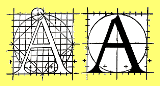
Study of the letter "A" in 1526.

At CAMA DERUTA about a year and a half ago we had the pleasure of enjoying the lecture of an Italian  Professor teaching our artists how to write the Renaissance way.

We were delighted by knowing how Renaissance artists would have done the writing in Renaissance times. We did a full imersion in times past.

The inspiration for the Renaissance writing comes from the Latin classical culture: spaces between words were separated by triangles or leaves, letters were written with reinforces called "graces" in order to make reading easier from far. This technique was used for inscriptions on monuments and Churches, as you may notice when visiting the original art buildings in Italy.

In modern times this kind of writing in typography goes under the name of "serif fonts". 

We loved the lesson and we will always remember that day. The Artists did their testing on a custom made platter for a special Cama customer. The outcome was really graceful!


----


FRIENDS OF CAMA 
Join the Facebook Page to Receive Blog Updates 
posted by Roberta Niccacci

NEW!

Now on Twitter

giovedì 9 dicembre 2010

Deruta History: The hospital of St. Jacques

INTRODUCING BORGODERUTA
                                          
Deruta is mainly divided into two parts: the upper part is the "Piazza", the lower part is known as "Borgo". A third neighborhood is the "Valle", located north-east of Deruta between the two main districts. 

The Borgo is where artisans and craftsmen traditionally lived. In the Renaissance in the Borgo of Deruta there was a hospital for the pilgrims on their way to Rome from Santiago de Compostela (Spain), called "Hospital of St.Jacques).

The pilgrims devoted to St.Jacques had the shell as their symbol (left shoulder of St.Jacques in the image). In this post we are publishing the original plaque of the hospital dated 1594.

We love Borgoderuta, nowadays Ambassador of talents like "Cama" and more to come for you!

**************************************************************************

Writing in Latin: "Hospitalis Iacobi Sub Regim Comunis"  -  tr: "Hospital of  St.Jacques under the control of the Commune". The plaque belongs to the Ceramics Museum of Deruta. 

Deruta ceramics: Easy and friendly shopping at Cama!

The first multiple shipment of Cama majolica is getting ready to sail!
POSTPONED PROJECT - WILL ADVISE WHEN READY -

Dear Friends of Cama and New Customers,

The Cama website is a work in progress and we build it with you and around you. Your feedback is important to us!

If you are not feeling confident to conclude your shopping experience now, feel free to send us your pre-orders. Simply follow these steps:

1) Select your purchase;
2) Push the button "order";
3) Fill in the customer's information;
4) Press the button "send order".

Start sending your pre-orders now and you will be sure to be included in the first collective shipment  to the United States from Cama.  All the packages friendly close to one another by ship up to the port of New York and forwarded with grace to your home address!

Reminder: For orders coming in within January 1st, 2011  -  Expected arrival date: March 15th, 2011.
Note: Ships are every three months: March, June, September and December.

Important notice: In case of unsufficient quantitites worth shipping by boat,  alternatively shipments will be effected by air DDP (Duty Delivery Paid).

++++++++++++++++++++++++++++++++++++++++++++++++++++
By shipping collectively by boat we will help the environement and encourage the slow old fashioned way of experiencing life!


venerdì 26 novembre 2010

FRIENDS OF CAMA: THE SPRING BASH


POSTPONED EVENT - WILL ADVISE WHEN READY


CAMA 1st Day of Spring Special!

We are accepting orders now to be picked up at the "CAMA Spring Bash" in California  in  March 2011.
There will be a satellite party in the State of Washington also in  March, with details to follow.

Roberta Niccacci and one of the Cama Artists will attend the party in California and will introduce new Cama items to be seen for the first time. Also, there will be a raffle of a beautiful Cama pitcher and tray, and other items to benefit a well-known Bay Area Charity... to be announced!

To take part in Cama's rebirth, enter the code "Friends of Cama" in the delivery address next to your name on your order.
"1st Day of Spring Special" orders must be placed by January 1st, 2011. Please note that party orders will have to be picked up at a CAMA Spring Bash in Berkeley or Seattle on March 20th.

We look forward to seeing you there!

A special Thank you to:
The Friends of Cama - Bay Area, California
The Friends of Cama - Germany
The Friends of Cama - Italy 
Borgo Deruta, srl 

**************************************

The happy ending story of Cama now available on the Friendsofcama - facebook fan page  and/or twitter. Become a Friend of Cama with just a click. Thank you for your preference.

Cama Deruta: a business that goes beyond business.


giovedì 25 novembre 2010

1861- 2011: 150th Anniversary of the Unification of Italy

Roberta Niccacci in her 1800s costume
for the cortege in Piegaro (PG) celebrating
the 150th Anniversary of Italy. 


Italy became one country as we know it in the shape of a boot with the islands of Sardinia and Sicily in 1861. Next year we are celebrating the 150th Anniversary of the Unification of Italy.


Italy was originally a Kingdom, the so-called Kingdom of Italy. It was a constitutional Monarchy. This Monarchy lasted in Italy until June 2nd 1946 when the existing Italian Republic was constituted and the Monarchy abolished.
Umbria is one of the 20 regions of Italy which were formally recognized for the first time in 1947. Italy nowadays has about 60 million inhabitants from the Alps to Sicily with about 8,000 kilometres (5,000 miles) of beautiful coastline. From Umbria, it takes 2 hours to get to either coast.

There are several theses about the origin of the name “Italy” both from Latin and from the Etruscan language. Its meaning goes back to Veal and/or cow. Italy has always been an agricultural country with a strong tradition in breeding animals for meat and for working the fields.
Latin was the language of the Romans and of the Ancient Roman dominion from the 8th Century B.C. to 476 A.D. with its last Roman Emperor. The Roman culture gave birth to the Italian language through Latin, influenced other languages like French and Spanish and lent many words to the English language.
All the words in English that are similar to Italian are called “false Friends” and there are dictionaries in the market in order to learn how not to get confused between the meaning ("significato") and the writing of the word itself ("significante"). When you are aware of false friends that really means you know the Italian language or reverse. Though it is always easy to get trapped by false friends, just like in real life.
From my lecture "Welcome to Umbria, the green heart of Italy" for the art classes of Mr. Tony Turpin "Learn to Paint in Umbria, Italy May 9 – 20, 2010".


martedì 23 novembre 2010

Classic Deruta Patterns Meanings


Classic Deruta patterns by Cama, setting the trend in the US market in the past 30 years through the store of Biordi's in San Francisco and other famous ceramic specialty stores. 
The Cama Deruta workshop was closed on June 18th, 2011 and looks forward to merging into another workshop to resume her dinnerware production hopefully within 2012. 
Cama fan page on Facebook: www.facebook.com/friendsofcama

Ricco Deruta - Acanthus leaves, scrolls and flowers taking inspiration from the genius of the artist Perugino, who worked and lived in the city of Perugia. An example of his work is the "Cambio" (exchange office) in Perugia. Historical pattern from Deruta (First half of the 16th century). More popular with the "Star" center version.

Raffallesco - The dragons take inspiration from the Nero home in Rome where artists in the Renaissance went to study the classical themes of the Roman age. Interpretation of the grotesques of Vatican's rooms painted by the artist Raffaello. Historical pattern from Deruta (Second half of the 16th century).

**************************************************************************
Each workshop in Deruta offers a different styling and interpretation of the Classic Deruta patterns. Look for the original designs. These patterns are by Cama based on the original Cama tracing papers. 
**************************************************************************

Antico Deruta - Created by Cama upon the original tracing papers of Ricco Deruta. On a silver background that soothens the strength of the cobalt blue color.  Cama original pattern. Source of inspiration of all  similar patterns in the market.

Orvieto Green Rooster - Pattern dedicated to the city of Orvieto where the original Middle Age pattern pieces where found in archeological sites. The rooster was added later on by the artists of Deruta.

**************************************************************************

**************************************************************************


Siena - Reproduction of the floor of the Cathedral of Siena. The sitting deer is a symbol of knowledge and elegance. It takes inspiration from the Biblical psalm starting "Sicut Cervus ad Fontes Aquarum" (tr. The same way the deer goes to the water fount"). Black and brown are the colors of the city of Siena.


Arabesco - Mediterranean pattern of Iberian origins. You may find it in Portugal in a very interesting interpretation. This pattern goes back to the 17th century.

**************************************************************************


- Original Posts by Roberta Niccacci -

FRIENDS OF CAMA 
Join the Facebook Page to Receive Blog Updates 

NEW!

Now on Twitter

domenica 21 novembre 2010

Deruta dinnerware: The best handwoven fabrics from Umbria

1. "Zucca" pattern by Cama and Brozzetti "Saint Peter" Pattern
2. "Trapezio" pattern by Cama and Brozzetti "Lions" Pattern
3. "Muschio" pattern by Cama and Brozzetti "Griphon" Pattern


In my research about the defense and rescue of Umbrian high-end crafts I recently met Miss Marta Cucchia, the heir of the famous workshop "Giuditta Brozzetti" in Perugia.

I am in love with her fabrics which are still "hand-beaten". Her workshop is located in a Romanic Church of Franciscan origins downtown the old city.

This is the kind of precious art example where the word "expensive" must be banned. Indeed it takes days to make a runner, as an example, and it is worth every penny of its price. The yarns are of first quality in terms of softness and colors (hand-dyed), the best in the market. Marta uses linen, cotton, silk and cashmere.

I took draft photos of the combinations of the Cama
ceramics patterns and Brozzetti fabrics. Marta found the perfect match for all the patterns. A wonderful marriage. The web address of the Giuditta Brozzetti workshop is www.brozzetti.com.

One last note: Marta can be of great help, because of her passion for her family tradition and also because she is an interior designer with lots of taste. The website is beautiful but does not make justice to the beauty of the fabrics.

Therefore I will be happy to bring these beautiful works of art of Renaissance origins with me to the United States. You will have an authentic piece of art history at your home to enjoy forever.

Also a great tribute to the engagement of Italian women in the past century for the defense of art crafts. It is thanks to sensitive women like Giuditta Brozzetti in the early 1920s that the ancient Italian art of hand-weaving came back to life after the Industrial Revolution had made its victims.

Fabrics are seen in the best homes in Perugia, Italy. A great tradition in our region, painted on frescoes by the greatest Italian artists. Seen in the best travel magazines and specialty books. The last laboratory left in the Old World, unique: www.brozzetti.com.

Example photos showing the following Cama patterns: 1. Zucca, 2. Trapezio, 3. Muschio.

mercoledì 17 novembre 2010

November 25th: Cama online store open for shopping!


Dear Friends, returning customers and new customers,

We are happy to inform you that the online store is ready for shopping. We look forward to serving you!

The Cama online store is the most innovative service direct from the workshop to the final customers. No third parties between us.

We thank you for supporting our art by shopping with us.

With this occasion I would like to thank everybody in our creative team in Italy for their help, patience, professional assistance and for believing in Cama. A special thank you to the Friends of Cama and to Mary and her family in the United States. Cama would not be the same without all of you.

With lots of love and the best wishes for a happy holiday season coming up. Stay tuned!

Roberta Niccacci
Your personal shop Assistant


Photo: My brother Andrea and myself at the traditional Saint Catherine's lunch with the Cama artists and our family on November 25th, Feast of Saint Catherine, Patron of the Ceramicists of Deruta.

martedì 5 ottobre 2010

Deruta Celebrations: Feast of Saint Francis of Assisi

The Canticle of the Creatures
(Rear of the Aedicule of Saint Francis at "Valle"
Hand painted book).

On October 4th in Assisi we celebrate the Feast of Saint Francis. We are very devoted to Saint Francis in Deruta. Our main Church is dedicated to Francesco.

Saint Francis is the Saint Patron of Italy.

In this image a handpainted ceramics plaque, part of the aedicule of Saint Francis on the way to the "Piazza", downtown Deruta, in the Rione "Valle" ( Deruta district facing north). 

Singing the Canticle of the Creatures written by Saint Francis  makes us feel all the peace and the love of Saint Francis' prayers, the strenght and power of nature.

We love Saint Francis.

In all these years I had never seen that there was a ceramics book on the back of the aedicule.